Environmental Finance Future of ESG Data 2023 post event reflections
Reflections on 2023 Future of ESG Data Conference
.jpg)
James Phare · 18 Oct 2023 · 2 min read

These reflections were originally posted by the author on linkedin.
Getting up on a dark, frosty, monday morning at 5.45am (joys of new found rural life!) I'll admit to apprehension on whether my energy levels would sustain a full programme of ESG ratings methodologies, data & disclosure standards, single / double / triple materiality etc. My concerns proved ill founded however - kudos to Peter Cripps & Environmental Finance for putting on a really great event!
It felt like there was a distinct difference in this event to many others I've attended in recent years with little time was devoted to abstract truisms ("what you can measure you can manage..." etc.) & a shared acknowledgement that working within sustainability data right now is an incredibly FAST moving necessitating a healthy dose of pragmatism.
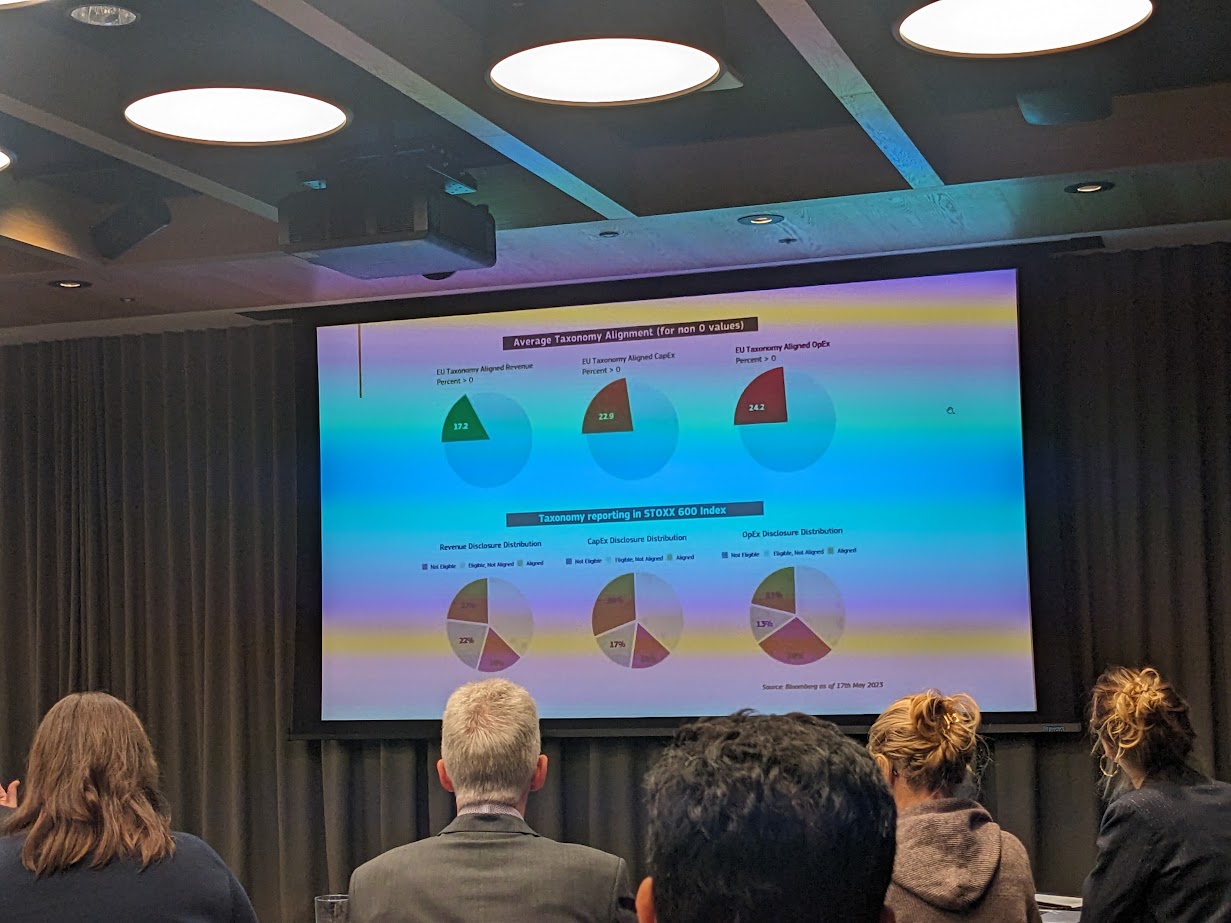
A few post event thoughts whilst fresh
🔌 Everyone detests term "interoperability", even the standards setters....Fortunately consolidation continues apace with new collaborations like EFRAG & CDP
💲 ESG Data market now worth $1bn apparently
📉 Systematically assessing corporate transition plans still challenging but another fast changing area with initiatives like the Transition Planning Taskforce (TPT)
🔣 ESG Data Quality remains woeful in many areas with low auditability, low coverage, opaque methodologies, difficult to defend estimates & a general lack of accountability amongst ESG data providers. Some tragically comic examples throughout the day covering things like backfilling Scope 3 estimates based on sector averages
💻 European Single Access Point (ESAP) will revolutionise how investors access & make decisions with comprehensive ESG data coverage for companies in scope for ESRS & beyond. With free to access data, the right data standards, data architecture & using SEC Edgar as benchmark this could be a real game changer if implemented correctly with a well documented data model / ontology & good data standards (solid open symbology is a must!). Extended implementation timeline to 2027 means we'll need to continue using ML-powered disclosure tools for a while yet💯 ESG ratings have served their purpose for ESG 1.0 & need to radically evolve to stay relevant in a landscape of abundant, free to access raw ESG data. ESG data consumers whilst welcoming abundance of indicators (e.g. the 1.4k of EFRAG) need effective filters & contextual data.... (watch this space)
💹 Strongest use case to justify ESG tech and data investments remains alpha generation (some would say alpha of the neural variety... 😉 )
🧠 Knowledge Graphs increasingly being adopted by leaders for data integration and analysis 💕 Personal highlight for me was Andrew Ang's talk on using alternative ESG data for alpha - some great examples of using proxy indicators for measuring fuzzy concepts like corporate culture, unconventional DEI metrics such as veteran employment & green patent registrations

Here's to next year - we will certainly be in attendance again!

.jpg)

.jpg)